Palm 106: Marriage Line and Relationship Line Guide
Key takeaway: The marriage line is not a fixed promise about when or whether someone marries. It works better as a small clue about how someone opens up, commits, and turns affection into daily life.
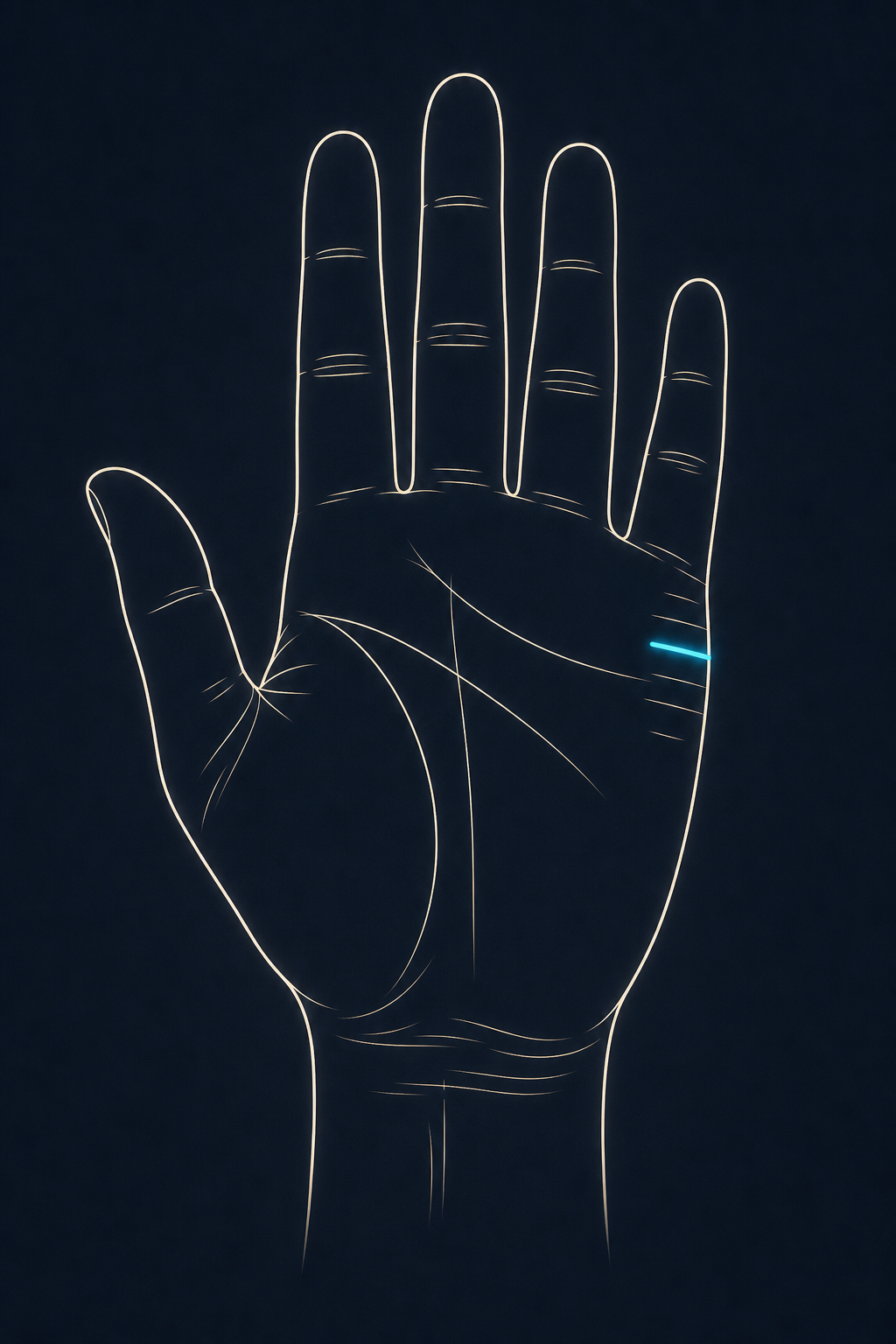
The name “marriage line” can make it sound like a simple line for marriage count or marriage age. A better reading is more careful. The heart line describes emotional temperament, the head line shows judgment patterns, the Mount of Venus reflects affection energy, and the Mount of Mercury relates to communication. The marriage line adds the smaller detail: what happens when affection starts becoming a real-life commitment.
Palmistry traditions vary by culture and school. This article uses traditional palm-reading language for entertainment and self-reflection. It should not be treated as proof, diagnosis, or a substitute for real relationship decisions.
1) Location: Outer Edge Below the Little Finger
Where to look: On the Mercury side, below the little finger, on the outer edge of the palm.
Reference zone: The space above the heart line and below the base of the little finger.
Common mistake: A large line across the middle of the palm is usually the heart line, not the marriage line.
The line may look faint when the palm is fully flat. Slightly cup the hand or view the little-finger side from an angle to see the short horizontal marks more clearly.
2) Length: The Power to Sustain a Bond
Long and clear: This usually points to someone who takes close bonds seriously and tries to keep them steady through routine and responsibility.
Short: This does not mean a lack of love. It often belongs to people who trust slowly, keep their independence, or treat intimacy as something private.
Extends deeply into the palm: A relationship may reach deeply into life plans, daily structure, and responsibility.
3) Depth and Clarity: Emotional Weight
Deep and clean: The person may focus strongly on one meaningful bond and have clearer standards around commitment.
Fine but straight: Affection may be quiet and refined. Trust and manners matter more than dramatic expression.
Faint with many fine marks: Feelings are active, but certainty may come slowly. The person can think a lot inside relationships.
4) Slope: The Emotional Direction of Commitment
Gently rising: Relationships can bring confidence, social ease, and motivation.
Mostly horizontal: Balance and stability matter. The person may prefer a relationship that does not shake daily life too much.
Drooping downward: This is a caution sign for worry, emotional burden, or taking on too much responsibility alone.
5) Forks: Different Directions to Reconcile
Fork at the end: Different life directions, distance, values, or expectations may need honest conversation. It does not automatically mean separation.
Fork at the start: Hesitation, timing issues, or external circumstances may shape how a relationship begins.
Many small branches: Affection exists, but outside variables or emotional changes may make the relationship less simple.
6) Breaks, Islands, and Chains
Break in the middle: A pause, shift, or change in relationship conditions. Do not make a big conclusion from one break; check the surrounding marks and the heart line too.
Island shape: A period of misunderstanding, distance, or unspoken pressure.
Chain-like line: Sensitive feelings and subtle worries. Commitment may take longer to become simple and steady.
7) Multiple Lines: Sensitivity, Not Marriage Count
Multiple marriage lines should not be reduced to “multiple marriages.” They can point to memorable bonds, sensitivity around intimacy, or relationship standards that changed over time.
Clearest line: The central relationship pattern or most influential bond.
Short upper line: Later-life affection, mature relationship standards, or a quieter bond after growth.
Short lower line: Early romantic learning, hesitation, or a relationship that shaped expectations.
8) Read It with the Heart Line and Mounts
Strong heart line + clear marriage line: Emotional certainty and commitment power support each other.
Strong heart line + faint marriage line: Love can be intense, but turning it into practical commitment may take time.
Full Mercury mount + clean marriage line: Communication, negotiation, and timing help relationships work.
Strong Venus mount + many fine marks: Affection energy is rich, but the person may over-give or become tired.
9) Compare Both Hands
Traditional palmistry often reads the non-dominant hand as inherited tendency and the dominant hand as developed life pattern. If the line is clearer on the dominant hand, relationship standards may be becoming more practical. If it is softer now, the current season may emphasize personal recovery, work, or independence.
10) Favorable Flow Signals
One clear, balanced line: Stable commitment without excessive attachment.
Soft upward ending: A bond that supports vitality and self-expression.
Clean space between heart line and marriage line: Less unnecessary anxiety between emotion and commitment.
11) Caution Signals
Small lines cutting across it: Interference, schedule pressure, outside opinions, or misunderstandings may enter.
Strong downward droop: Watch for taking too much emotional responsibility alone.
Repeated chains or islands: Worry may appear before trust. Clear conversation matters.
FAQ
Q. What if I do not have a marriage line?
A. It does not mean no marriage or no love. It may simply suggest slow trust, privacy, or a stronger focus on independence and personal stability.
Q. Do multiple lines mean multiple marriages?
A. Not necessarily. They can show memorable bonds, sensitivity to relationship possibilities, or changing emotional standards.
Q. Does a fork mean breakup?
A. Not automatically. It often points to different directions that need discussion and adjustment.
Q. Which hand should I read?
A. Read both. The non-dominant hand is used for inherited tendencies, while the dominant hand reflects current choices and developed patterns.
Q. Can the marriage line predict exact marriage age?
A. Some traditions attempt timing, but this article avoids exact prediction and focuses on relationship patterns.
The marriage line is small, but it can say a lot about how affection becomes commitment. Do not let one mark define your fate. Use it as a prompt to notice how you love, communicate, and turn intimacy into daily life.
← Back to Palm Hub